

The next generation of robotic systems will not only execute movements with precision – they will understand physical interaction. This shift from pure motion control to tactile perception is at the core of NanoSen’s collaboration with Sarcomere Dynamics.
Together, we are working to integrate advanced force sensing technology into robotic manipulation systems, enabling robots to detect contact, interpret force, and react in real time.
A Strong Partnership in Robotics and Sensing
Sarcomere Dynamics develops high-dexterity robotic end effectors designed to perform complex manipulation tasks in industrial environments. Their portfolio includes advanced robotic grippers and dexterous robotic hands capable of handling intricate operations.
At NanoSen, we focus on next-generation force sensing solutions based on polymer nanocomposite materials combined with proprietary impedance-based measurement technology. Our sensors are ultra-thin, flexible, and highly sensitive – making them ideal for integration into robotic surfaces.
By combining these two areas of expertise, the collaboration bridges the gap between robotic motion and tactile feedback.
From Gripping to Understanding Interaction
Conventional robotic grippers typically rely on position control or motor current feedback. While effective for many applications, these approaches do not provide direct insight into what is happening at the contact surface.
This is where tactile sensing changes the paradigm.
By integrating NanoSen’s sensors into robotic grippers, it becomes possible to:
- detect initial contact with an object
- measure force distribution across the gripping surface
- identify changes in interaction, such as slip
- adjust grip in real time
This transforms robotic manipulation from a predefined action into an adaptive process.
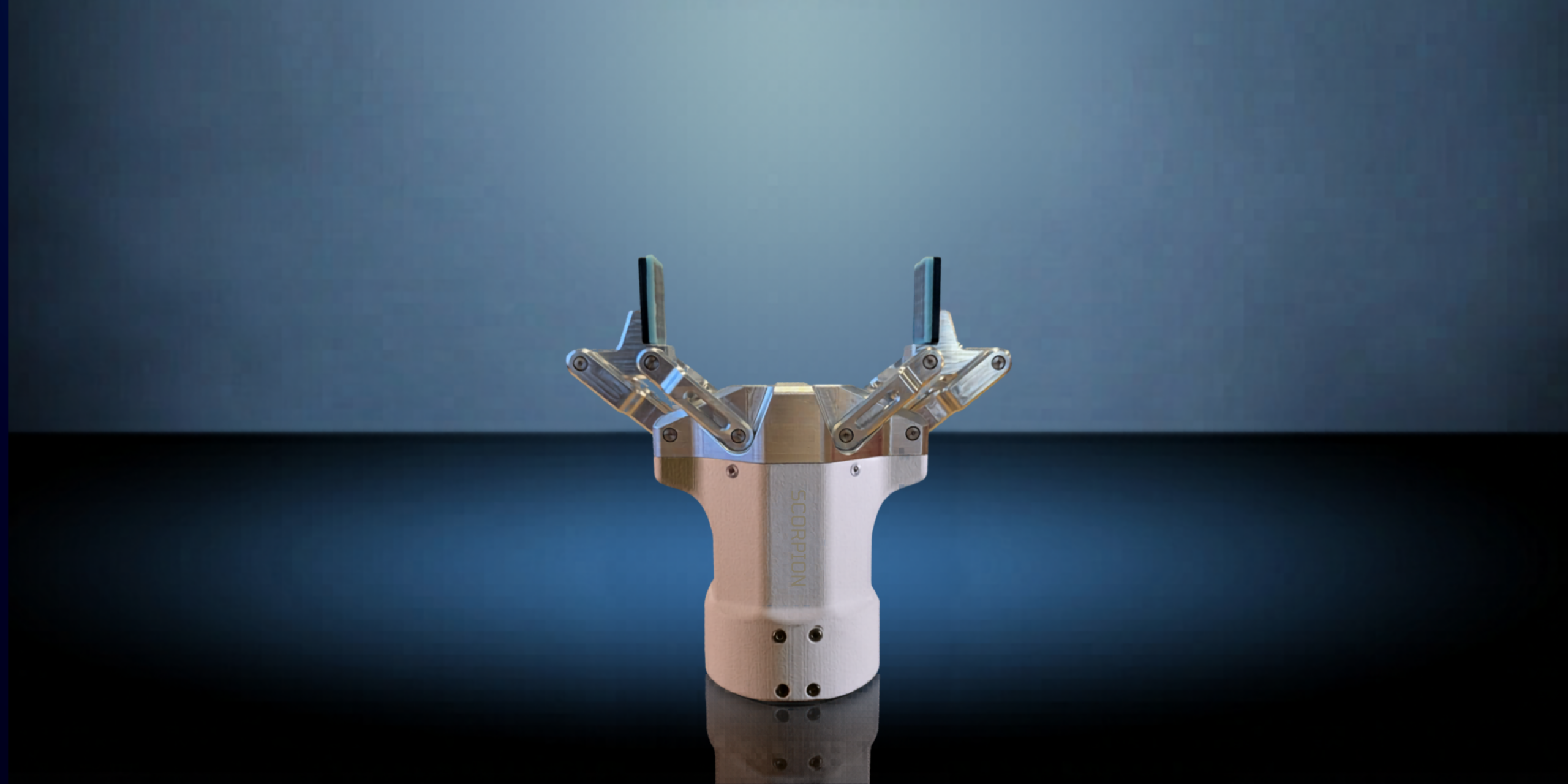
The Scorpion Gripper
As part of the collaboration, NanoSen’s sensing technology is being implemented in the Scorpion Gripper developed by Sarcomere Dynamics.
This first integration serves as a demonstrator for key functionalities such as:
- contact detection and force feedback
- adaptive grip control
- slip detection and response
The system allows the gripper to react dynamically to changes during object interaction, improving both precision and reliability.
Toward High-Dexterity Robotic Hands
While the gripper represents the first step, the collaboration is designed with a broader vision in mind.
The long-term goal is to integrate tactile sensing into more advanced robotic systems, including dexterous robotic hands. These systems require a much higher level of interaction awareness, where sensing becomes a critical component of control.
By enabling distributed force sensing across complex surfaces, tactile technology opens new possibilities for handling delicate, irregular, or unpredictable objects.
Driving the Future of Robotic Interaction
As robotics continues to evolve, the ability to perceive and respond to physical interaction will become increasingly important. The collaboration with Sarcomere Dynamics represents an important step in this direction. By combining advanced sensing technology with high-dexterity robotics, we are working toward systems that are not only precise, but also responsive, adaptive, and capable of interacting with their environment in a more natural way.

No responses yet