

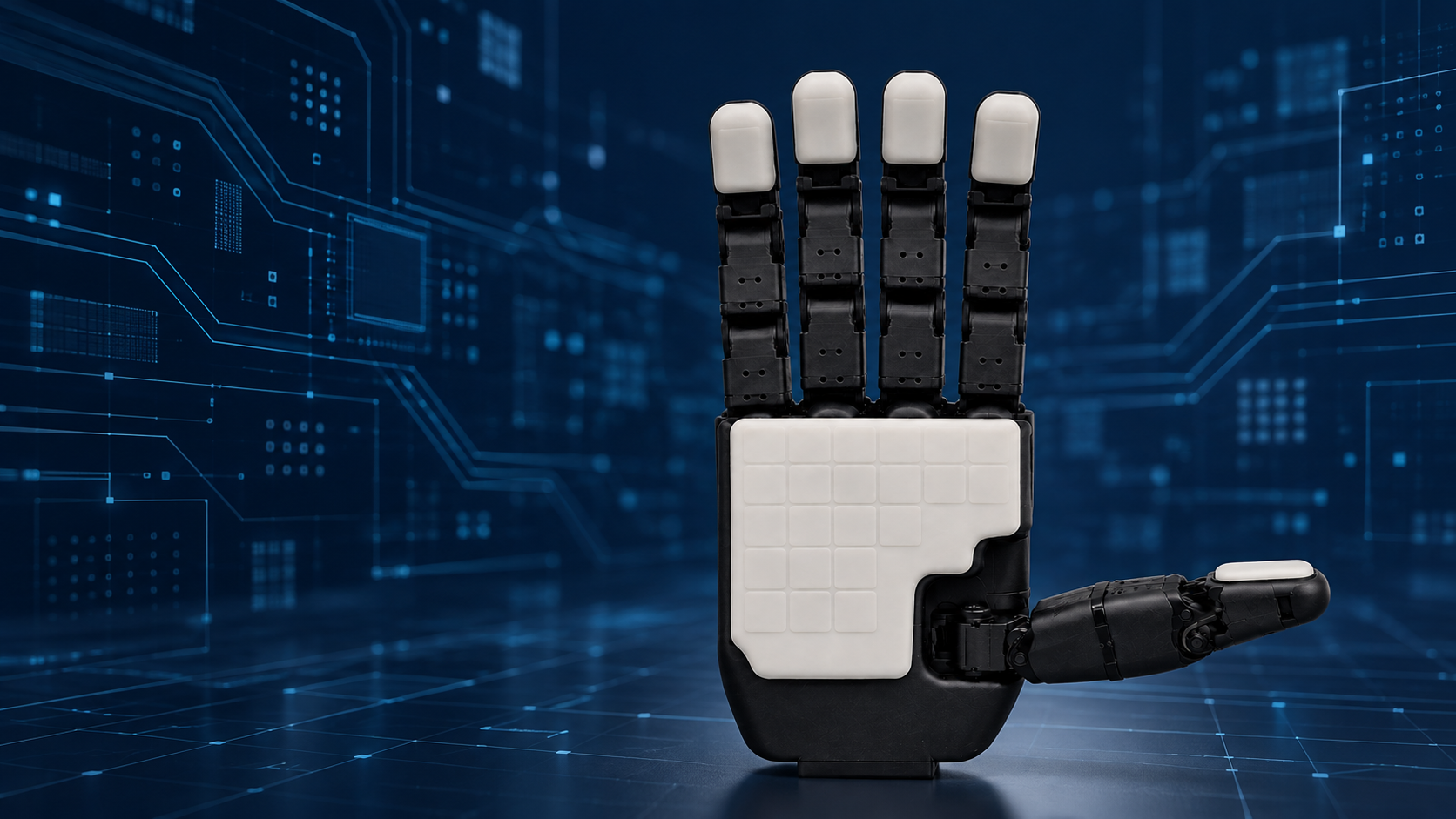
Our latest robotic hand prototype does not move. Press against a fingertip or the palm, however, and the visualization shows where force is applied and how it is distributed.
With five sensing zones per finger and a matrix of 24 sensors across the palm, the prototype makes contact visible across 49 measurement points. It demonstrates the contribution we want to make to physical AI: providing robots with force data about their interaction with the world.
Why Physical AI Needs Contact Feedback
Physical AI connects perception and decision-making with actions in the physical world. For robotic manipulation, those actions involve contact: holding a component, handling a container, or passing an object from one hand to another.
A camera can help locate an object and guide an approach. Force sensing adds information from the contact itself. Where is the hand touching the object? How is the load shared between contact areas? What changes as the object is repositioned? At NanoSen, we focus on making those interactions measurable. Our role is to provide sensing capabilities that robotics developers can use within their own software, control systems, and AI applications.
A Hand That Makes Force Distribution Visible
Our demonstrator uses a passive, 3D-printed hand. We have equipped its fingers and palm with sensors and visualize the measured values. Each finger has five measurement zones. This allows us to distinguish contact at different areas of the finger and see how the measured load is distributed between them. Contact near a fingertip produces a different pattern from contact spread across several zones. That spatial information helps describe how an object contacts the hand.
The palm extends this view with 24 sensors arranged as a matrix. Together, the finger zones and palm matrix show which instrumented areas carry load and how strongly each is loaded.
For developers, this creates a practical way to explore sensing requirements: which areas need coverage, how many zones are useful, and what information an application needs to capture.
From Measuring Contact to Responding to It
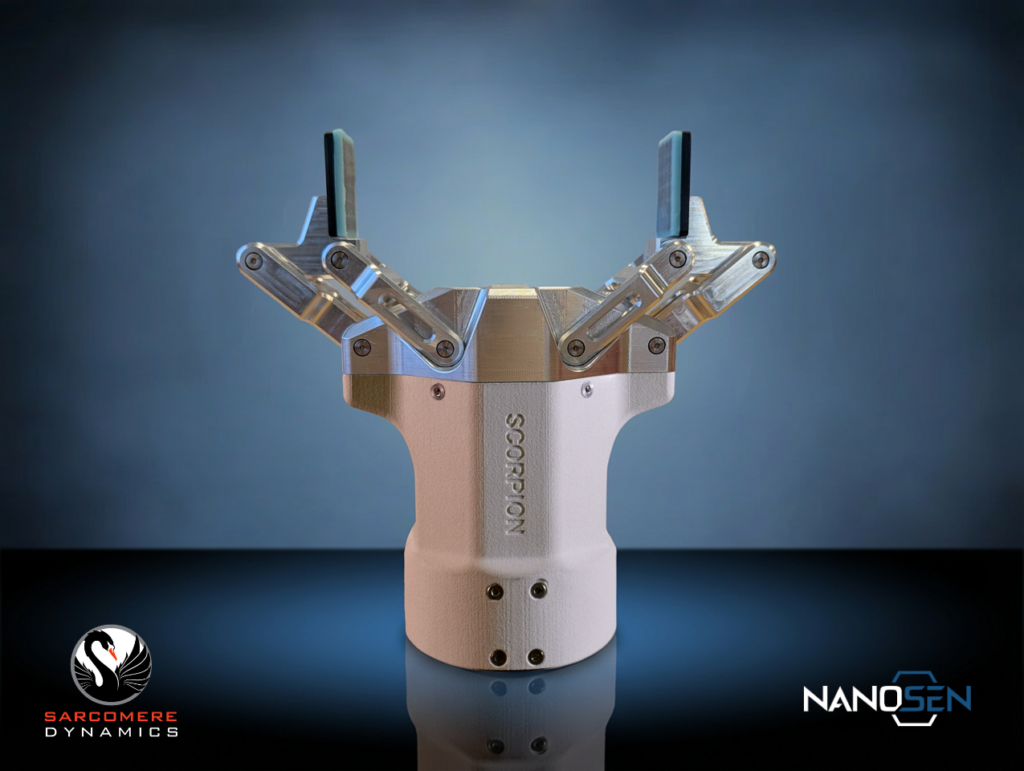
The next step is connecting measurements with a robot’s response. One example comes from our broader collaboration with Sarcomere Dynamics. In our research project with the scorpion gripper, we are exploring slip detection, with the aim of allowing the robot to recognize when an object starts to slip and increase its grip force accordingly. This connects sensing, interpretation, and action. The sensors provide measurements, software identifies a relevant change, and the controller adjusts the grip. Slip detection and grip adjustment can involve conventional control methods or AI-based approaches, depending on the implementation. In either case, useful contact data provides the foundation for a response.
Our Role as an Enabler of Physical AI
We develop force sensing technology. Our proprietary FSI approach combines polymer nanocomposite sensing materials with dedicated measurement electronics. For robotics developers, our contribution is the force measurement layer. Partners develop the software and control or AI functionality that turns those measurements into behavior. The hand prototype helps make that division tangible. It shows the contact information we can capture today and opens a discussion about how developers could use it in their own systems.
Bringing Sensing to Existing Robotic Hands
Robotic systems often already exist before tactile sensing becomes part of the development conversation. The integration question is then practical: how can sensing be added to the available hand geometry?
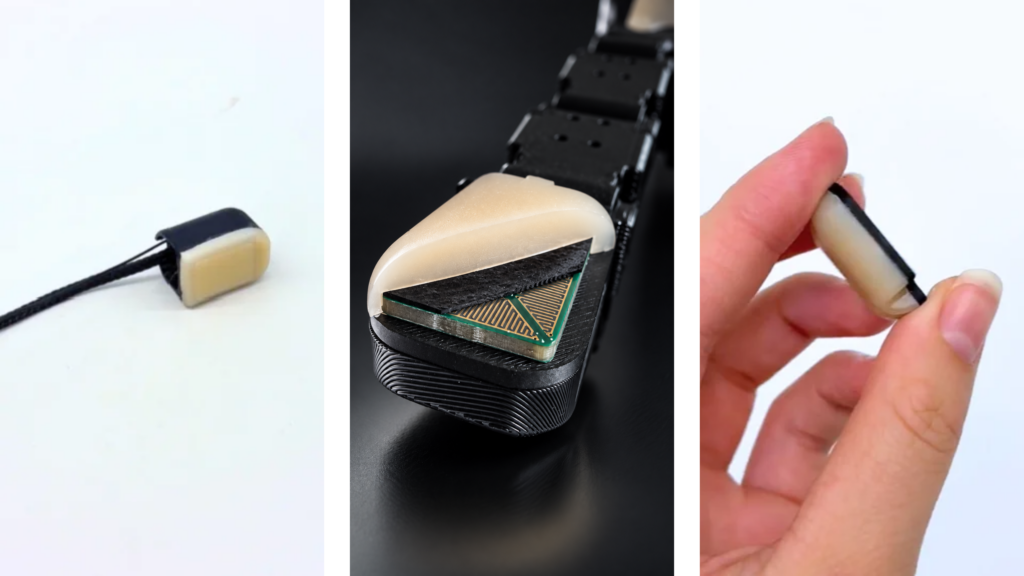
Sensor caps are one possible approach to retrofitting existing fingers. Integration into a new hand design offers other possibilities. The appropriate route depends on the contact surfaces, mechanical constraints, required coverage, and intended task. Our prototype gives those conversations a starting point. Input from developers helps us understand where sensing is needed and which integration approaches are worth pursuing.
What Does Your Robotic Hand Need to Feel?
We are interested in the requirements behind the next developments. Do you need fingertip feedback, sensing across several finger zones, or coverage of the palm? Are you developing a new hand or looking to add sensing to an existing system?
Talk to us about your application. We welcome feasibility discussions and market input to help shape force sensing around real robotics needs.

No responses yet